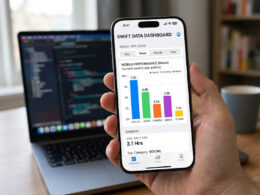





The evolution of WebKit remains one of the most important areas for any iOS Developer building modern applications across Apple platforms. With the arrival of iOS 27, iPadOS 27, macOS 27, visionOS 27, and Safari 27, Apple has introduced significant enhancements designed to improve web compatibility, simplify cross-platform development, and deliver more advanced experiences for both native and hybrid applications.
During WWDC 2026, Apple unveiled the latest WebKit innovations for Safari 27, highlighting a strong focus on rendering quality, advanced HTML capabilities, web extension improvements, and tools that make it easier to create immersive experiences and three-dimensional content.
For professionals working with Swift programming, SwiftUI, and Xcode, these updates create new opportunities to integrate web content, build more capable applications, and leverage modern technologies across iPhone, iPad, Mac, and Apple Watch.
WebKit in iOS 27: A Strong Focus on Quality and Interoperability
Unlike some previous releases that focused primarily on introducing new features, Safari 27 and WebKit place a major emphasis on stability and compatibility.
Apple has delivered more than 1,100 fixes and improvements throughout WebKit, addressing areas such as:
- Website compatibility
- Standards compliance
- SVG enhancements
- Rendering engine optimizations
- Integration between web technologies
- JavaScript behavior improvements
- Better browser interoperability
For any iOS Developer using WKWebView inside applications built with Swift or SwiftUI, these enhancements translate into a more reliable and predictable user experience.
Many modern applications rely on embedded web content, administration dashboards, interactive documentation, or hybrid user interfaces. Thanks to the improvements introduced in WebKit for iOS 27, these experiences run more consistently without requiring custom workarounds.
Enhanced CSS and Rendering Performance
One of the most important updates affects WebKit’s rendering engine.
Apple has refined several long-standing layout components to align more closely with modern web standards.
This results in:
- Greater visual accuracy
- Fewer inconsistencies across browsers
- Better performance for complex interfaces
- Improved support for responsive layouts
For developers building enterprise tools, dashboards, or hybrid applications using Swift and WKWebView, these improvements significantly reduce the need for browser-specific fixes.
Apple is also continuing to expand support for modern CSS capabilities, including enhancements related to:
- min()
- max()
- clamp()
These features make it possible to create more adaptive and dynamic interfaces while reducing the amount of code required.
CSS Grid Lanes: Advanced Layouts Without JavaScript
One of the standout technologies highlighted in Safari 27 is CSS Grid Lanes.
Although initially introduced in Safari 26.4, Apple continues to expand and promote its adoption within the WebKit ecosystem.
CSS Grid Lanes enables developers to create masonry-style and dynamic grid layouts using only CSS.
Previously, these types of layouts often required:
- JavaScript libraries
- Manual calculations
- Third-party frameworks
- Dynamic element reordering
With Grid Lanes, developers can create sophisticated layouts using native web technologies.
This is particularly useful for applications displaying:
- Image galleries
- Product catalogs
- Social media feeds
- News platforms
- Content management systems
Developers working with Swift can benefit from these capabilities when embedding web content inside native applications.
Thanks to WebKit, layouts created with CSS Grid Lanes render correctly across iPhone, iPad, and Mac without requiring additional solutions.
Customizable Select: Fully Customizable HTML Controls
One of the most exciting announcements in Safari 27 is the introduction of Customizable Select.
Traditionally, HTML select elements have been difficult to customize without completely replacing them with JavaScript-based alternatives.
The downside of this approach is that it often sacrifices important native benefits such as:
- Accessibility
- Keyboard navigation
- Screen reader compatibility
- Standard platform behavior
With Customizable Select, Apple allows developers to deeply customize these controls while preserving all the advantages of the native component.
Developers can modify:
- Visual appearance
- Dropdown menus
- Icons
- Selection indicators
- Internal layouts
- Rich option content
It is even possible to include:
- Images
- Secondary text
- Complex layouts
- Structured content
For teams building enterprise applications or advanced forms, this feature significantly reduces the need for custom-built components.
From an iOS Developer perspective, this creates a more consistent experience between web interfaces and native applications.
Improved Accessibility Experience
One of the biggest benefits of Customizable Select is enhanced accessibility.
Apple emphasizes maintaining the native behavior of the HTML element while enabling advanced customization capabilities.
This ensures:
- Keyboard navigation support
- VoiceOver compatibility
- Better experiences for users with disabilities
- Reduced implementation errors
Organizations developing accessible applications with SwiftUI and Xcode can leverage these improvements when integrating web content into their projects.
HTML Model Comes to iOS, iPadOS, and macOS
Another major announcement is the expansion of the HTML Model element.
Initially introduced in visionOS, this technology is now available on:
- iOS 27
- iPadOS 27
- macOS 27
The Model element allows developers to embed 3D models directly into web pages using a native HTML syntax.
This represents a similar evolution to the introduction of multimedia elements such as:
- video
- audio
- picture
Developers can now incorporate three-dimensional objects directly into HTML documents without relying on third-party solutions.
Potential use cases include:
- E-commerce
- Architecture
- Engineering
- Education
- Healthcare
- Virtual museums
- Industrial visualization
For developers specializing in Swift programming, this technology creates new opportunities to combine web content and native application experiences.
Integration with AR Quick Look
A particularly exciting capability is the integration with AR Quick Look.
Users on iPhone and iPad can view three-dimensional objects directly within their physical environment using augmented reality.
This enables:
- Product visualization
- Furniture previews
- Interior design demonstrations
- Industrial component inspections
- Educational content experiences
E-commerce businesses can especially benefit from this functionality.
Developers using Swift and Xcode can integrate these capabilities through WebKit without building custom augmented reality systems from scratch.
Immersive Experiences in visionOS 27
Apple has also introduced new capabilities for visionOS 27.
Websites using HTML Model can now launch fully immersive experiences.
The new Immersive API works similarly to the traditional Fullscreen API.
Users can voluntarily enter an immersive environment generated directly from a web page.
This capability represents a significant step toward next-generation spatial web experiences accessible through Safari.
For developers working with SwiftUI and spatial computing technologies, this marks the beginning of a new era of immersive web applications.
Easier Distribution of Web Extensions
Apple continues improving support for web extensions.
Safari already provides a model that closely aligns with standards used by other modern browsers.
Safari 27 introduces a particularly important enhancement: Safari Web Extension Packager.
Previously, distributing Safari extensions required:
- A Mac
- Xcode
- Safari-specific packaging workflows
With the new tool, developers can package and distribute Safari extensions using virtually any browser and operating system.
This dramatically simplifies development workflows.
Teams creating cross-platform extensions can reuse:
- HTML
- CSS
- JavaScript
- Manifest files
- Shared resources
The result is a more open ecosystem aligned with modern web standards.
Benefits for Developers Using Swift
Although web extensions are often associated with frontend development, they also provide advantages for teams working with Swift.
Many organizations simultaneously build:
- iOS applications
- macOS applications
- Safari extensions
- Web-based tools
The simplified distribution process reduces costs and accelerates feature delivery.
Additionally, applications built with Xcode can extend their functionality through web extensions integrated within the broader Apple ecosystem.
Continued Evolution of MapKit JS
Another noteworthy technology is MapKit JS.
Apple continues expanding this framework for building interactive maps on the web.
Benefits include:
- Integration with Apple Maps
- Cross-platform compatibility
- Strong privacy protections
- Optimized performance
Developers can create modern mapping experiences across websites and hybrid applications.
For projects built with SwiftUI, this technology can complement native MapKit functionality through advanced web-based experiences when needed.
What These Updates Mean for an iOS Developer
The improvements introduced in WebKit for iOS 27 go far beyond Safari itself.
Their impact extends to any application that uses:
- WKWebView
- Embedded HTML content
- Hybrid solutions
- Web dashboards
- Enterprise tools
- Cross-platform applications
Developers working with Swift, SwiftUI, and Xcode gain immediate benefits through:
- Increased stability
- Improved compatibility
- New visual capabilities
- Advanced 3D content support
- Augmented reality integration
- Immersive experiences
- Better accessibility
- Modernized web extension tooling
The Future of WebKit in the Apple Ecosystem
Safari 27 demonstrates Apple’s continued commitment to a modern standards-based web.
Rather than focusing exclusively on flashy new features, the company has invested heavily in strengthening the foundations of WebKit.
The more than 1,100 fixes included in this release reflect a strategy centered on quality, interoperability, and long-term stability.
At the same time, technologies such as HTML Model, Customizable Select, and the Immersive API offer a glimpse into the future of web experiences across Apple platforms.
For every iOS Developer, understanding these innovations is essential for taking full advantage of iOS 27, macOS 27, visionOS 27, and future generations of Apple operating systems.
The combination of WebKit, Swift, SwiftUI, and Xcode continues to establish itself as one of the most powerful foundations for building modern, accessible, and cross-platform applications. Developers who embrace these advancements will be well-positioned to create richer, more efficient, and future-ready experiences throughout the Apple ecosystem.