

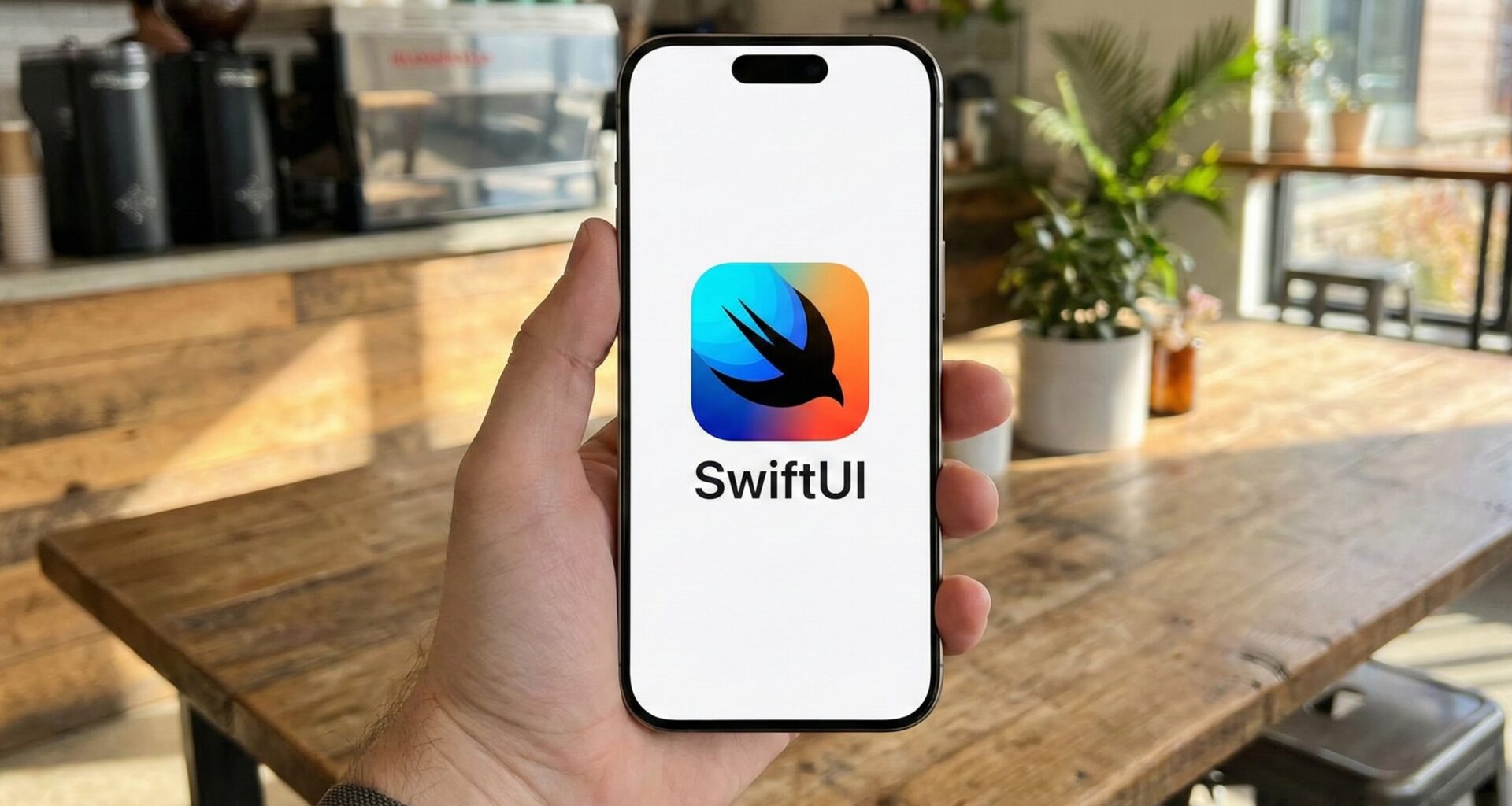

With the release of iOS 26, Apple introduces a new visual language called Liquid Glass, designed to bring depth, motion, and a modern aesthetic to interfaces built with SwiftUI. For any iOS Developer, understanding how the glassEffect() modifier works is essential to fully leverage the platform’s latest visual capabilities.
In this tutorial, you will learn what Liquid Glass is, how to use it correctly in Swift programming, and how to integrate it into applications for iOS, macOS, and watchOS using Xcode.
What Is Liquid Glass in SwiftUI?
Liquid Glass is an evolution of traditional translucent materials. Unlike earlier effects that relied mainly on background blur, this new style introduces a surface that behaves like liquid glass, with dynamic reflections and a sense of volume that responds to its visual context and user interaction.
Apple designed Liquid Glass for floating interface elements such as toolbars, action buttons, and secondary controls, rather than for primary background content.
The glassEffect() Modifier
In SwiftUI, the Liquid Glass effect is applied using the glassEffect() view modifier. This modifier can be attached to any view and automatically renders the glass surface.
import SwiftUI

struct ContentView: View {
    var body: some View {
        Text("Hello SwiftUI")
            .padding()
            .glassEffect()
    }
}
With this code, the text is rendered on a translucent surface that visually integrates with the content beneath it.
System Requirements and Compatibility
Liquid Glass is available starting with iOS 26, so it is important to handle compatibility if your application supports earlier system versions.
struct GlassCompatibilityView: View {
    var body: some View {
        if #available(iOS 26, *) {
            Text("Liquid Glass enabled")
                .padding()
                .glassEffect()
        } else {
            Text("Classic material")
                .padding()
                .background(.ultraThinMaterial)
        }
    }
}
This approach ensures a consistent experience across all supported devices.
Customizing the Liquid Glass Effect
The glassEffect() modifier allows for additional customization, such as applying color tints to match your app’s visual identity.
Text("Liquid Glass in SwiftUI")
    .padding(16)
    .glassEffect(
        .regular.tint(Color.blue.opacity(0.6))
    )
Using opacity correctly is essential to maintain the balance between aesthetics and readability.
User Interaction and Animations
Liquid Glass can visually respond to user interaction. SwiftUI makes it possible to enable subtle animations that enhance the perceived quality of the interface.
Button("Tap") {
    // Button action
}
.padding()
.glassEffect(
    .regular
        .tint(.purple.opacity(0.7))
        .interactive()
)
When the user taps the button, the glass surface reacts with changes in light and depth.
Reusable Components with Liquid Glass
In professional Swift programming projects, it is recommended to encapsulate complex visual effects into reusable components.
struct LiquidGlassButton: View {
    let systemImage: String
    let action: () -> Void

    var body: some View {
        Button(action: action) {
            Image(systemName: systemImage)
                .font(.system(size: 18, weight: .semibold))
                .foregroundColor(.white)
                .frame(width: 56, height: 56)
        }
        .glassEffect(
            .regular
                .tint(Color.accentColor.opacity(0.75))
                .interactive()
        )
    }
}
This component can be reused across iOS, macOS, and watchOS without modification.
Grouping Views with GlassEffectContainer
When multiple Liquid Glass elements are placed close together, they can be grouped inside a container to share the same visual context.
GlassEffectContainer {
    LiquidGlassButton(systemImage: "house.fill") {
        print("Home")
    }

    LiquidGlassButton(systemImage: "plus") {
        print("New")
    }

    LiquidGlassButton(systemImage: "bell.fill") {
        print("Notifications")
    }
}
This pattern is ideal for floating action bars and contextual control groups.
Using Liquid Glass on macOS and watchOS
Thanks to SwiftUI, the same code works on macOS and watchOS. On macOS, Liquid Glass fits particularly well in popovers and sidebars. On watchOS, it should be used sparingly due to the smaller screen size and performance constraints.
Best Practices for iOS Developers
- Avoid excessive use of glassEffect()
- Apply Liquid Glass only to floating UI elements
- Always test on real devices
- Use moderate opacity levels for tints
Conclusion
The Liquid Glass effect in SwiftUI represents a significant step forward in interface design across the Apple ecosystem. For any iOS Developer, mastering the glassEffect() modifier enables the creation of more modern, expressive, and system-aligned applications.
By using Swift, SwiftUI, and Xcode, developers can easily integrate this effect into apps for iOS, macOS, and watchOS, improving both visual appeal and user experience.
If you have any questions about this article, please contact me and I will be happy to help you 🙂. You can contact me on my X profile or on my Instagram profile.